After a harsh Erie winter, you’ll want to watch for telltale drywall damage signs. Water stains, yellowing patches, and visible mold growth can signal serious moisture problems. Look for bubbling paint, warping walls, and unexpected cracks that suggest structural compromise. Those musty odors and crumbling wall surfaces aren’t just cosmetic—they’re warning signs of potential extensive damage. Stick around, and you’ll reveal the full scope of winter’s hidden home threats.
Water Stains and Discoloration
Although Erie winters can be harsh, water stains and discoloration on your drywall are more than just unsightly—they’re potential warning signs of serious damage.
These marks often result from humidity changes and temperature fluctuations that stress your home’s structural integrity. You’ll want to pay close attention to brown, yellow, or gray patches, as they typically indicate moisture infiltration.
Left unchecked, these stains can lead to mold growth, weakened walls, and costly repairs. Don’t ignore these telltale signs—they’re your home’s way of communicating potential water damage that needs immediate professional assessment. Residential drywall services in Erie can provide expert inspection and repair to address these critical issues before they escalate.
Visible Mold Growth
Water stains aren’t just a cosmetic issue—they can quickly escalate into a more serious problem like mold growth. When excessive moisture levels persist, you’re inviting unwelcome fungal guests into your home. Professional drywall repair services in Erie can help assess and mitigate potential mold damage before it becomes a serious health hazard.
- Spotting dark or discolored patches on walls
- Detecting a musty, damp odor
- Observing fuzzy or slimy textures
- Noticing crumbling drywall panels
- Experiencing unexplained allergy symptoms
Mold doesn’t just look unsightly; it can compromise your home’s structural integrity and your family’s health. If you’ve detected mold after Erie’s harsh winter, it’s pivotal to address the issue immediately. Professional drywall replacement might be your best safeguard against further damage and potential health risks.
Bubbling or Peeling Paint
Bubbling or peeling paint signals a deeper moisture problem that you can’t ignore after Erie’s punishing winter conditions. When your walls start showing these telltale signs, it’s more than just a cosmetic issue—it’s a warning of potential sagging drywall and discolored ceilings lurking beneath.
Water damage from ice dams, condensation, or hidden leaks can compromise your home’s structural integrity. Don’t wait until the problem worsens. These paint imperfections aren’t just unsightly; they’re a cry for help from your walls, indicating moisture has penetrated deeper than you might realize.
Warping and Bulging Walls
After Erie’s harsh winter, a single inch of wall warping can spell disaster for your home’s structural integrity. Don’t ignore those uneven surfaces and warped walls – they’re more than just an eyesore. Watch for these critical signs:
- Walls that bow or bulge outward
- Uneven textures around window and door frames
- Visible cracks running along wall surfaces
- Gaps between walls and baseboards
- Doors that suddenly stick or won’t close properly
These warning signals suggest moisture damage, potential structural issues, and the urgent need for professional drywall replacement. Catching these problems early can save you thousands in future repairs and protect your home’s value.
Cracks and Structural Damage
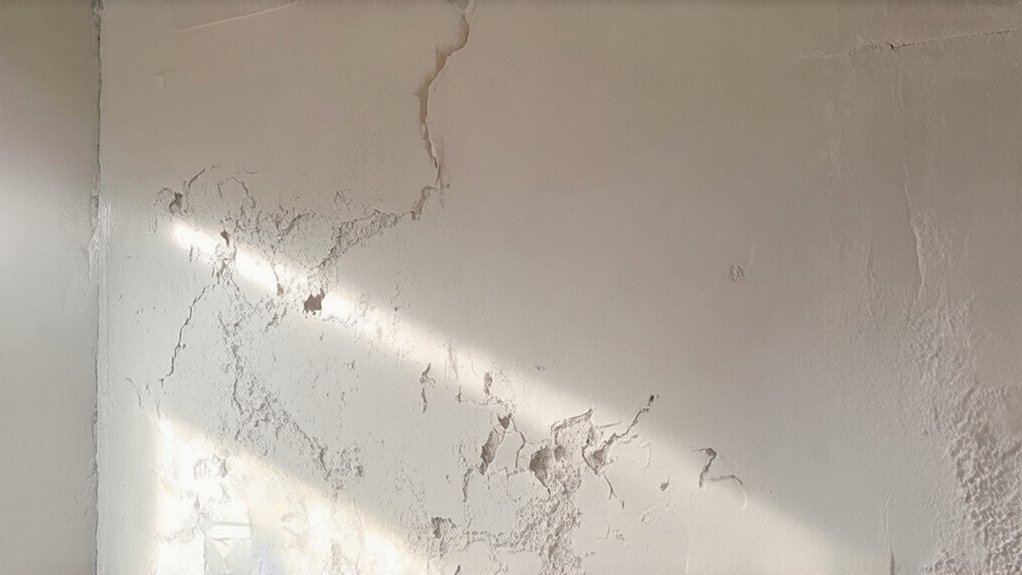
When Erie’s winter takes its toll, your home’s drywall can develop cracks that reveal deeper structural concerns. These uneven surfaces aren’t just cosmetic; they’re warning signs of potential foundational issues. You’ll want to inspect your walls carefully, looking for horizontal or vertical fissures that might indicate serious stress.
Crumbling edges and spider-web-like fractures can signal more than surface-level damage. They’re your home’s way of telling you something’s wrong. Don’t ignore these signs—they could mean water damage, shifting foundations, or structural compromise that needs immediate professional attention.
Unusual Odors and Musty Smells
Have you ever walked into your home and been greeted by a mysterious, musty smell that seems to permeate your living space? That odor might signal serious drywall damage from Erie’s harsh winter conditions.
Unusual smells often indicate underlying moisture problems related to:
- Condensation buildup behind walls
- Lack of ventilation in critical spaces
- Water damage from winter ice and snow
- Potential mold growth in hidden areas
- Compromised wall insulation
These warning signs suggest your drywall could be harboring significant moisture issues. If you’re experiencing persistent musty odors, it’s imperative to investigate potential structural damage and consider professional drywall replacement to protect your home’s integrity and your family’s health.
Frequently Asked Questions
How Much Does Professional Drywall Replacement Typically Cost?
You’ll likely spend $500-$1,500 for professional drywall replacement, with average material costs around $200-$400 and labor cost estimation ranging from $300-$1,100, depending on the damage’s extent and your room’s size.
Can I Replace Drywall Myself or Should I Hire Professionals?
You can DIY drywall installation if you’re handy, but hiring skilled drywall contractors guarantees professional results. Complex damage or extensive repairs might be best left to experts who’ll save you time, frustration, and potential costly mistakes.
How Long Does a Complete Drywall Replacement Project Usually Take?
You’ll typically need 2-3 days for a complete drywall replacement project, depending on the damage’s extent. Professional repair timelines can vary, but most scheduling allows for efficient work with minimal interference to your home’s comfort.
Will Homeowners Insurance Cover Drywall Damage From Winter Conditions?
Your insurance might cover winter drywall damage, depending on your policy coverage and deductibles. It’s best to review your specific policy and contact your agent to understand your exact protection for winter-related home repairs.
What Preventative Measures Can Help Avoid Winter Drywall Damage?
You’ll protect your home by winterizing exterior walls, checking insulation quality, sealing potential drafts, and maintaining consistent indoor humidity. These proactive steps prevent moisture buildup and temperature fluctuations that can damage your drywall during harsh winter conditions.
Conclusion
Don’t let winter’s harsh aftermath catch you off guard. Your home’s drywall can silently suffer damage that compromises its integrity and your living space’s health. By staying vigilant and recognizing these warning signs, you’ll protect your property and prevent costly, extensive repairs. Trust your instincts, and don’t hesitate to call a professional if you’re unsure about the extent of the damage.